In Malaysia’s rapidly digitalizing business landscape, where consumers seamlessly switch between WhatsApp, Facebook Messenger, Shopee, email, and phone calls, customer service has evolved from a support function to a core competitive edge. Driven by initiatives like My Digital Blueprint, Malaysian businesses of all sizes are grappling with two often-confused strategies: multichannel and omnichannel customer service. While both aim to meet customers where they are, their approach, effectiveness, and impact on customer loyalty differ dramatically. For Malaysian brands looking to thrive in a diverse, mobile-first market—where 80% of the internet population uses WhatsApp and 78% of consumers prefer businesses with WhatsApp support—understanding this distinction is critical.
This article breaks down the key differences, highlights why omnichannel is becoming non-negotiable, and explains how Udesk, a global customer service platform tailored for Malaysia’s needs, can bridge the gap between strategy and execution.
Multichannel Customer Service: Presence Across Channels, But Siloed Experiences
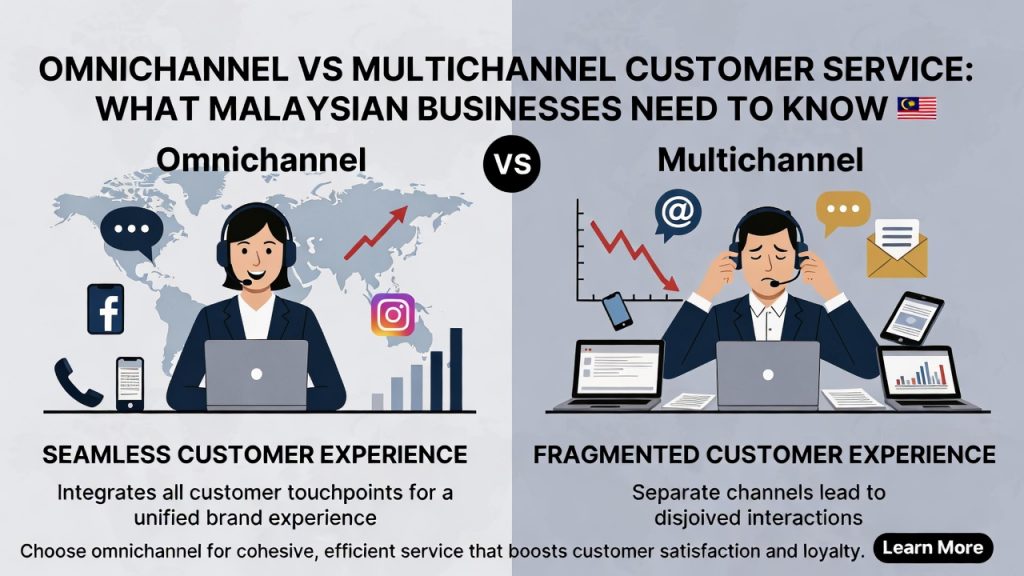
Multichannel customer service is the foundation of modern support: it means offering customer service through multiple independent channels. A Malaysian retail brand, for example, might provide support via phone, email, a Shopee chat widget, and Facebook Messenger. The goal is to give customers choice—letting them reach out through their preferred platform. However, this approach has a critical flaw: each channel operates in isolation, with no integration of customer data or conversation history.
For Malaysian businesses, this siloed structure creates significant friction. Imagine a customer in Kuala Lumpur who first inquires about a product return via WhatsApp, then follows up with a phone call to check the status. In a multichannel setup, the phone agent has no access to the WhatsApp conversation, forcing the customer to repeat their issue—a frustration 72% of亚太 consumers share. This disconnect not only wastes time but also damages trust: 60% of Malaysians abandon businesses due to poor service, and repeated explanations are a top complaint.
Multichannel support also limits operational efficiency. Agents must switch between separate tools for each channel, leading to longer response times and inconsistent service quality. For small and medium-sized enterprises (SMEs)—which make up 98.5% of Malaysian businesses—this inefficiency can strain limited resources, making it hard to compete with larger brands that can afford dedicated teams for each channel. While multichannel is a step up from single-channel support, it fails to deliver the seamless experience today’s Malaysian consumers expect.
Omnichannel Customer Service: Integrated, Customer-Centric Experiences
Omnichannel customer service solves the limitations of multichannel by focusing on integration, not just presence. It unifies all communication channels into a single platform, ensuring that customer data, conversation history, and preferences are shared across every touchpoint. The result is a seamless journey: a customer can start a conversation on Facebook Messenger, continue it via email, and finalize it with a phone call—without ever repeating their information. This approach puts the customer at the center, aligning all channels around their needs rather than treating each channel as a separate silo.
For Malaysian businesses, omnichannel support is not just a nice-to-have—it’s a necessity. The country’s linguistic diversity (Malay, English, Chinese dialects, Tamil) and fragmented channel usage demand a unified approach. An omnichannel system ensures that agents have access to a 360-degree view of the customer, enabling them to provide personalized, culturally sensitive support. For example, a customer who prefers to communicate in Tamil via WhatsApp can seamlessly switch to a phone call with an agent who speaks Tamil, with the agent already knowing their query history.
The business benefits of omnichannel are clear: according to industry data, companies with omnichannel support see 30% higher customer retention rates and 20% faster resolution times. For Malaysian e-commerce brands, which rely heavily on platforms like Shopee and Lazada, omnichannel integration ensures that customer inquiries from these marketplaces are linked to their overall purchase history, reducing confusion and improving satisfaction. Additionally, omnichannel systems leverage AI to automate routine inquiries—such as order tracking or refund status—freeing agents to handle complex issues, which is critical during peak periods like Ramadan or year-end sales.
Udesk: The Tailored Omnichannel Solution for Malaysian Businesses
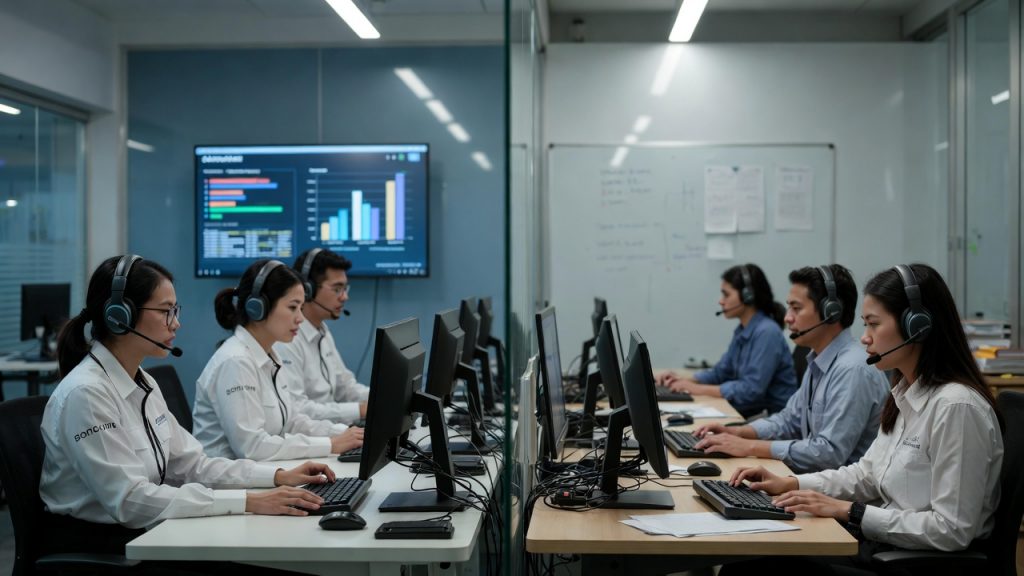
While the shift to omnichannel is clear, many Malaysian businesses struggle to implement it effectively—especially SMEs with limited technical resources. This is where Udesk comes in: a global omnichannel customer service platform optimized specifically for Malaysia’s unique market needs. Udesk addresses the core pain points of Malaysian businesses, from channel fragmentation to linguistic diversity, while delivering the scalability and affordability that SMEs require.
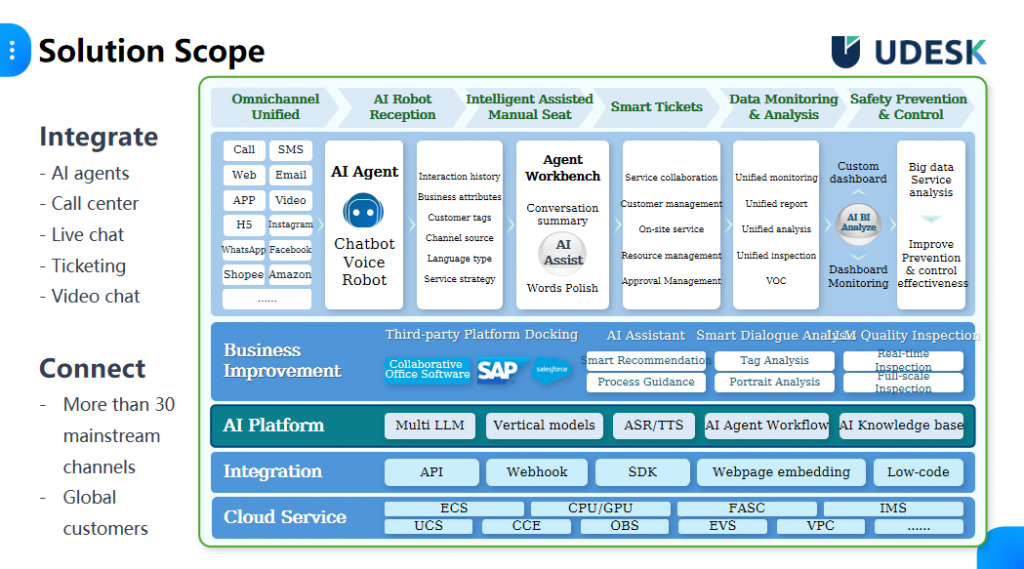
One of Udesk’s key strengths is its comprehensive omnichannel integration, which seamlessly connects all channels Malaysian consumers use most. It unifies WhatsApp, Facebook Messenger, Shopee, Lazada, email, phone, and even video calls into a single dashboard, ensuring agents have full visibility of customer interactions across every touchpoint. This eliminates silos and reduces repeat inquiries, boosting agent efficiency by 45% and cutting response times by 60%—critical for meeting the 1-hour response expectation of 65% of Malaysian consumers.
Udesk also addresses Malaysia’s linguistic diversity with localized multilingual support. Its AI chatbot offers real-time translation for Malay, English, Mandarin, Cantonese, and Tamil, with a 96% intent recognition rate—ensuring that customers can communicate in their preferred language without barriers. For businesses operating in multiple regions of Malaysia, this feature ensures consistent service quality, whether serving customers in Penang, Johor, or Kuala Lumpur.
Compliance is another key concern for Malaysian businesses, especially with strict MCMC regulations on data privacy. Udesk is fully compliant with local and international standards, including GDPR, ensuring that customer data is protected and businesses avoid legal risks. Its cloud-native architecture also offers scalability, making it suitable for businesses of all sizes—from small SMEs to large corporations. SMEs can start with basic omnichannel features and scale up as they grow, without the need for significant upfront investment.
Beyond integration and compliance, Udesk leverages AI to drive efficiency. Its AI text and voice robots operate 24/7, handling routine inquiries like order tracking, product FAQs, and refund requests—freeing agents to focus on complex issues. For example, Sony implemented Udesk’s text robot to handle 80% of simple customer and employee inquiries, reducing manual workload and improving efficiency. Udesk’s intelligent工单 system also automates workflow, ensuring that inquiries are routed to the right agent or department, reducing resolution times and improving team collaboration.
Udesk’s data analytics tool, Insight, further empowers Malaysian businesses by turning customer service data into actionable insights. Its可视化 dashboards provide real-time visibility into key metrics like response times, customer satisfaction, and agent performance, enabling businesses to identify gaps and optimize their service. For example, a Malaysian logistics company using Udesk reduced repeated issue explanations from 68% to 9% and improved its NPS by 15 percentage points through data-driven optimizations.
Making the Switch: Practical Steps for Malaysian Businesses
For Malaysian businesses ready to transition from multichannel to omnichannel support, the process doesn’t have to be overwhelming. Start by auditing your current channels to identify which ones your customers use most—for most Malaysian brands, this will include WhatsApp, Shopee, and phone. Next, invest in a platform like Udesk that unifies these channels and provides the localized features you need, such as multilingual support and compliance with MCMC regulations.
Train your agents to use the omnichannel platform effectively, emphasizing the importance of accessing customer context before responding. Finally, use data analytics to continuously refine your strategy—track customer satisfaction, resolution times, and channel usage to identify areas for improvement. Remember, the goal is not just to be present across channels, but to create a seamless, personalized experience that builds loyalty.
Conclusion
In Malaysia’s competitive business landscape, customer service is no longer a support function—it’s a key differentiator. Multichannel support offers choice, but it fails to deliver the seamless experience today’s consumers demand. Omnichannel support, by contrast, unifies channels, eliminates silos, and puts the customer at the center—driving loyalty, efficiency, and growth. For Malaysian businesses looking to implement omnichannel support effectively, Udesk is the ideal partner: its localized features, comprehensive integration, and AI-driven efficiency are tailored to meet the unique needs of Malaysia’s market, whether you’re a small SME or a large corporation. By embracing omnichannel and leveraging Udesk’s capabilities, Malaysian businesses can not only meet customer expectations but exceed them—securing a competitive edge in the digital age.
》》Click to start your free trial of Omnichannel Systems, and experience the advantages firsthand.

 Customer Service& Support Blog