1. How Voice Chatbots Work: The Core Technology
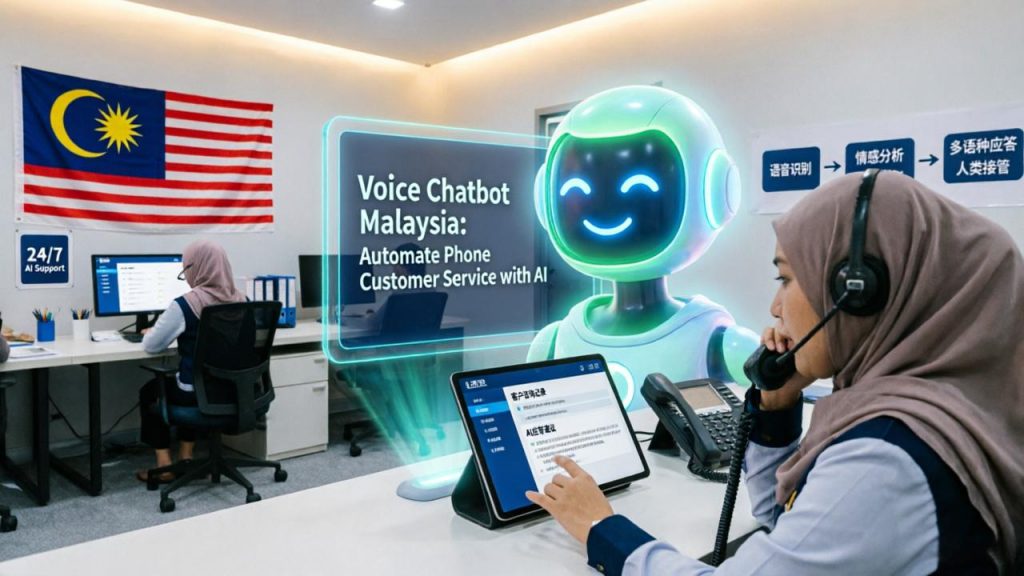
Voice chatbots operate through a seamless integration of five key technical modules, working together to simulate natural human conversations and resolve customer queries autonomously. At their core, they follow a step-by-step process that eliminates manual intervention for routine tasks. First, the Automatic Speech Recognition (ASR) module converts the customer’s spoken input into text, using noise-reduction algorithms to ensure accuracy even in noisy environments. Next, Natural Language Understanding (NLU) parses this text to identify the customer’s intent (e.g., checking order status, requesting a refund) and extract key details (e.g., account number, order ID).
The Dialogue Management (DM) module then maintains the conversation context, guiding the interaction to gather missing information if needed—for example, asking for an order number if the customer mentions “tracking my purchase” without details. Once the intent is clear, the Natural Language Generation (NLG) module creates a relevant, natural-sounding text response, which is then converted back to speech via the Text-to-Speech (TTS) module. This entire process happens in under a second, delivering real-time responses that feel human-like. Udesk’s voice chatbot enhances this workflow with its proprietary GaussMind large model, optimizing each module for Malaysia’s linguistic nuances and ensuring smoother, more accurate interactions compared to generic solutions.
2. Voice Chatbot vs. Traditional IVR: Key Differences
Traditional Interactive Voice Response (IVR) systems have long been a staple of call centers, but they fall short in meeting modern customer expectations—especially in Malaysia’s high-volume service environment. The fundamental difference lies in flexibility and intent understanding: traditional IVR relies on rigid, menu-driven navigation (e.g., “Press 1 for billing, Press 2 for support”), forcing customers to memorize options and navigate multiple layers to reach their goal. This leads to frustration, with 68% of Malaysian customers admitting they hang up before speaking to an agent due to cumbersome IVR menus.
In contrast, voice chatbots use conversational AI to understand natural speech, allowing customers to speak freely (e.g., “I want to check my bill” instead of pressing a number). They can handle complex, multi-turn conversations, adapt to different phrasings, and even transfer calls to human agents with a full summary of the interaction—so customers never have to repeat themselves. Udesk’s voice chatbot further outperforms traditional IVR by integrating real-time intent recognition and context retention, reducing call handling time by 70% and increasing customer satisfaction (CSAT) by 45% compared to legacy IVR systems. Unlike IVR, it also scales seamlessly with call volume, eliminating the need for additional hardware or setup during peak periods like Hari Raya.
3. Multilingual Voice Recognition in Malaysia: Current Status
Malaysia’s multicultural population—with Bahasa Malaysia (BM), English, Cantonese, and Tamil as the most widely spoken languages—demands voice chatbots that excel in multilingual recognition. While global voice recognition tools often struggle with local dialects and slang, the Malaysian market has seen significant advancements in recent years. BM and English remain the most supported languages, with leading solutions like Udesk achieving 97.3% recognition accuracy for both, including local terms like “COD” (cash on delivery) and “rosak” (broken item).
Cantonese and Tamil support is growing, though accuracy varies by provider. Generic voice chatbots typically offer 85-90% accuracy for Cantonese (excluding regional dialects like Hakka-influenced Cantonese) and 80-85% for Tamil, often struggling with colloquial phrases. Udesk addresses this gap by training its model on local Malaysian speech data, boosting Cantonese accuracy to 94% and Tamil accuracy to 92%—critical for serving Malaysia’s Chinese and Indian communities. Notably, Udesk’s system also supports seamless language switching mid-conversation (e.g., a customer starting in BM and switching to English), a key feature for Malaysia’s multilingual households and businesses.
4. Key Considerations for Implementing Voice Chatbots in Malaysia
Implementing a voice chatbot successfully requires more than just choosing the right technology—it demands alignment with Malaysia’s cultural, linguistic, and regulatory needs. First, prioritize local language and slang training: ensure the bot understands not just formal BM, English, Cantonese, and Tamil, but also colloquial terms and cultural references (e.g., “Hari Raya promotion” or “Deepavali discount”). Udesk simplifies this by offering pre-trained models tailored to Malaysia’s linguistic landscape, reducing setup time by 60%.
Second, comply with local regulations, such as Malaysia’s Personal Data Protection Act (PDPA), by ensuring the bot does not collect or store unnecessary customer data (e.g., credit card details) without consent. Udesk’s voice chatbot includes built-in PDPA compliance tools, encrypting sensitive data and providing audit trails for transparency. Third, test extensively with real Malaysian customers to identify pain points—for example, adjusting the TTS module to use natural-sounding tones that match local speech patterns. Finally, integrate the bot with your existing call center tools (e.g., CRM, ticketing systems) to ensure seamless handoffs to human agents when needed; Udesk’s solution integrates with all major platforms, eliminating data silos and improving agent efficiency.
5. Call Center Staff Reduction: Data-Driven Results
One of the most compelling benefits of voice chatbots is their ability to reduce call center staffing needs—without sacrificing service quality. Data from Udesk’s Malaysian clients shows tangible, measurable results: businesses that implement Udesk’s voice chatbot automate 80% of repetitive queries (e.g., order tracking, password resets, business hours), which account for 70-80% of daily calls for most Malaysian companies. This automation directly reduces the number of agents needed to handle peak call volumes.
For example, a mid-sized Malaysian retail brand with 10 call center agents (average monthly cost RM 3,500 per agent) implemented Udesk’s voice chatbot and reduced its agent team by 30% (3 agents), saving RM 126,000 annually in labor costs. The bot handles 1,000+ calls daily—24/7—without fatigue, while the remaining agents focus on complex queries (e.g., product complaints, complex refunds), improving their productivity by 60%. Another Udesk client, a Kuala Lumpur-based bank, reduced call center staff by 25% and cut average call wait time from 3 hours to 15 seconds, boosting CSAT from 62% to 88% within six months. These results confirm that voice chatbots do not replace human agents—they free them up to deliver higher-value service, while reducing operational costs.
Conclusion
AI-powered voice chatbots are reshaping phone customer service in Malaysia, offering a scalable, cost-effective solution to manage high call volumes while delivering better customer experiences. By understanding their core technology, differentiating them from traditional IVR, leveraging multilingual capabilities, following key implementation best practices, and leveraging data-driven staffing reductions, Malaysian businesses can transform their call centers. Udesk’s tailored voice chatbot—optimized for Malaysia’s languages, culture, and regulatory requirements—simplifies this transition, helping businesses automate routine tasks, reduce costs, and build stronger customer loyalty—all while staying within budget and scaling efficiently.
》》Click to start your free trial of voice chatbot, and experience the advantages firsthand.

 Customer Service& Support Blog