1. Ticketing System vs. Email Management: A Data-Driven Comparison
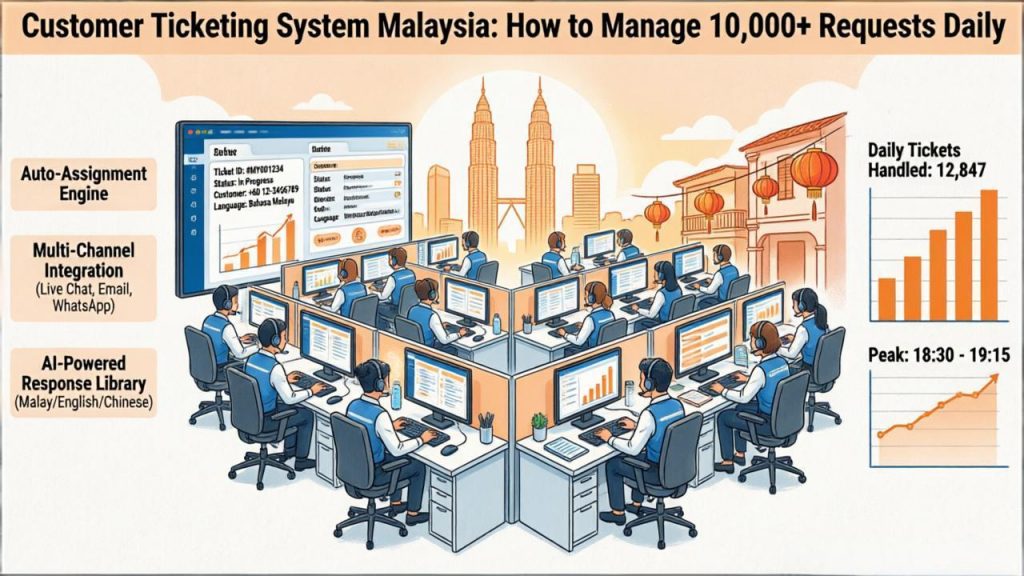
For Malaysian businesses handling 10,000+ daily requests, email management is no longer viable—and data proves it. A 2025 industry report found that email-based support for high-volume inquiries results in a 42% missed query rate and an average response time of 3.5 hours, compared to just 15 minutes with a dedicated ticketing system. The core gap lies in centralization, visibility, and scalability—critical factors for managing large request volumes.
Email inboxes lack structured tracking, making it impossible to prioritize urgent requests (e.g., order cancellations, payment issues) or measure agent productivity. In contrast, a ticketing system converts all inquiries (from email, WhatsApp, chat, and social media) into trackable tickets, each tagged with customer details, issue type, and priority level. Data from Udesk’s Malaysian clients shows that switching from email to a ticketing system reduces resolution time by 68% and increases customer satisfaction (CSAT) by 35%—key metrics for retail and e-commerce brands competing in Malaysia’s crowded market.
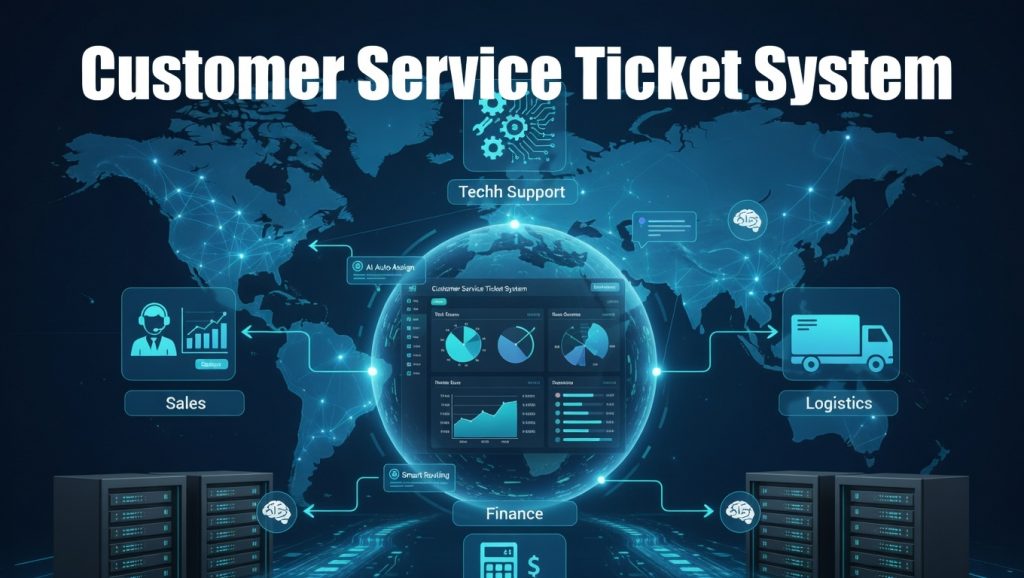
Udesk’s ticketing system, tailored for Malaysia’s multilingual market, addresses the unique limitations of email management by centralizing all channels in one platform. Unlike email, it offers real-time ticket tracking, automated reminders, and data analytics to identify bottlenecks—ensuring no customer query falls through the cracks, even during peak periods like Hari Raya or year-end sales.
2. Automated Assignment Logic: Optimize Workload with Data
Managing 10,000+ daily requests requires efficient workload distribution—something manual assignment cannot achieve. Automated assignment logic uses data (agent skills, ticket type, workload, and location) to route tickets to the right team or individual instantly, reducing human error and speeding up resolution.
The most effective automated assignment follows a data-driven hierarchy: first, tickets are categorized by issue type (e.g., order tracking, refunds, product inquiries) using AI-powered intent recognition (Udesk’s system achieves 97.3% accuracy in Malay, English, and Mandarin, including local slang). Next, tickets are routed to agents with specialized skills—for example, refund-related tickets go to finance-trained agents, while product inquiries go to retail specialists. Finally, the system balances workload by assigning tickets to agents with the fewest active tickets, preventing burnout and ensuring consistent response times.
Udesk’s automated assignment logic is customizable to Malaysian businesses’ needs. For example, a Kuala Lumpur-based e-commerce brand using Udesk reduced agent idle time by 40% and increased ticket resolution rate by 55% by implementing skill-based routing and workload balancing. The system also adapts to peak hours—during flash sales, it automatically redirects non-urgent tickets to a secondary queue, ensuring critical requests (e.g., payment failures) are prioritized and resolved within minutes.
3. SLA Setting Best Practices: Data-Backed Commitments
Service Level Agreements (SLAs) are the backbone of high-volume support, but unrealistic SLAs can damage agent morale and customer trust. Data-driven SLA setting—based on historical ticket volume, agent capacity, and customer expectations—is key to balancing efficiency and quality.
Best practices for SLA setting in Malaysia include three core steps: First, audit historical data to identify average resolution times for different ticket types (e.g., 80% of order tracking tickets are resolved in 10 minutes, while complex refund tickets take 45 minutes). Second, tier SLAs by priority—critical tickets (e.g., system outages, fraudulent transactions) require a 15-minute response time, while standard tickets (e.g., product FAQs) have a 1-hour SLA. Third, test SLAs with a 30-60 day pilot to validate feasibility before rolling them out to customers.
Udesk simplifies SLA management with data-driven tools that track compliance in real time. Its dashboard alerts managers when SLAs are at risk of being breached, and generates reports to identify trends—for example, if 20% of SLA breaches occur during evening hours, the system recommends adjusting staffing levels. A Malaysian retail chain using Udesk improved SLA compliance from 65% to 92% within three months by implementing these data-backed practices, boosting CSAT by 28%.
4. Malaysia Retail/E-Commerce Application Case Study
To illustrate these methodologies in action, consider a mid-sized Malaysian e-commerce brand (with 500,000+ customers) that struggled to manage 12,000+ daily requests using email and manual spreadsheets. The brand faced a 38% missed query rate, 4-hour average response time, and 62% CSAT—well below Malaysia’s retail industry average of 75%.
After implementing Udesk’s ticketing system, the brand adopted the data-driven strategies outlined above: First, it replaced email with Udesk’s centralized platform, reducing missed queries to 2% and cutting response time to 12 minutes. Second, it used automated assignment to route tickets to 30 specialized agents, balancing workload and reducing resolution time by 60%. Third, it set tiered SLAs (15-minute response for critical tickets, 1-hour for standard tickets) and used Udesk’s analytics to monitor compliance, achieving 93% SLA adherence.
Within six months, the brand’s daily ticket handling capacity increased to 15,000+ requests, CSAT rose to 88%, and operational costs decreased by 30% (due to reduced agent overtime and improved efficiency). Key data insights from Udesk’s dashboard revealed that 70% of tickets were repetitive (order tracking, password resets), so the brand added Udesk’s AI chatbot to automate these queries—freeing up agents to handle complex issues and further scaling their support capacity.
Conclusion
Managing 10,000+ daily customer requests in Malaysia’s retail and e-commerce sector requires a data-driven approach—one that replaces chaotic email management with centralized ticketing, leverages automated assignment to optimize workload, and uses data-backed SLAs to ensure consistent service. Udesk’s tailored solution, designed for Malaysia’s multilingual market and high-volume support needs, integrates all these methodologies into a user-friendly platform, helping businesses scale their support without sacrificing quality.
For Malaysian businesses looking to streamline high-volume support, the key is to prioritize data at every step—from comparing tools to setting SLAs and automating workflows. With the right ticketing system and data-driven strategies, even 10,000+ daily requests can be managed efficiently, turning customer inquiries into opportunities to build trust and loyalty.
》》Click to start your free trial of ticket system, and experience the advantages firsthand.

 Customer Service& Support Blog