What Is Multichannel Customer Service? Foundation with Limitations
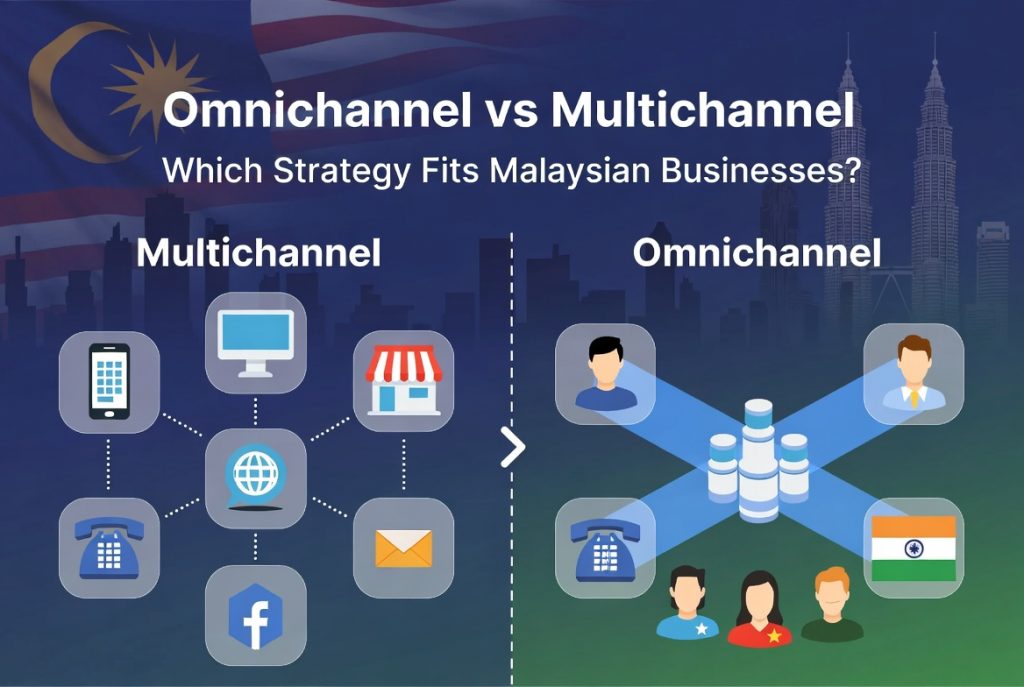
Multichannel service offers support across independent channels—phone, email, WhatsApp, Facebook Messenger, Shopee chat—giving customers choice. For Malaysian businesses new to digital, it’s easy to implement, requiring minimal integration. A small Kuala Lumpur retail business might use phone and WhatsApp; a mid-sized e-commerce brand adds email and Shopee chat.
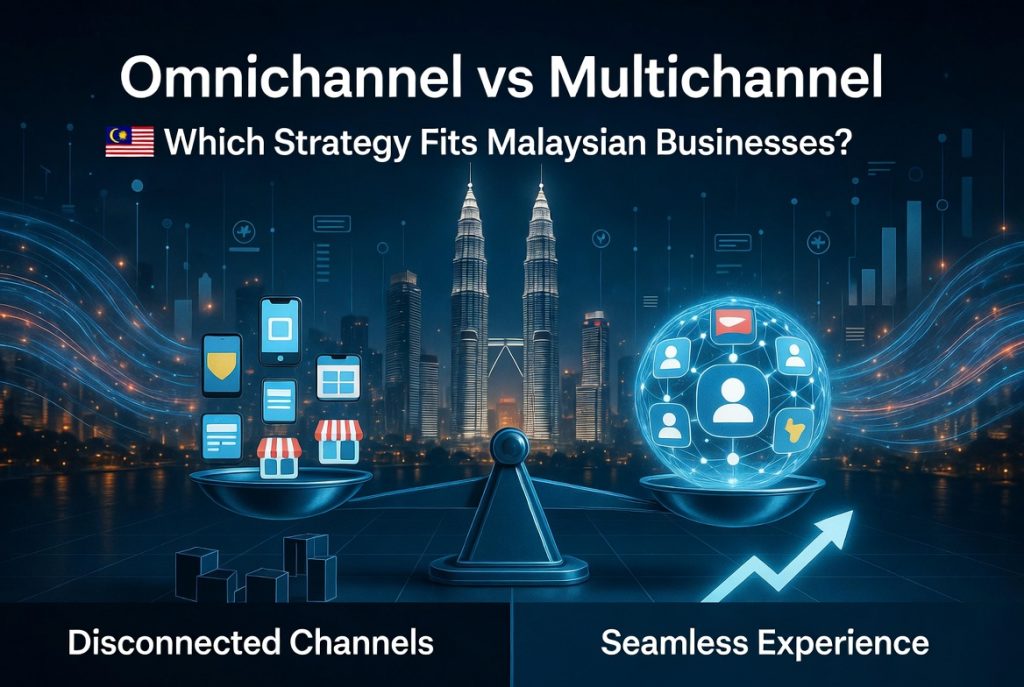
Yet, channel independence is its flaw. No shared data means customers repeat inquiries when switching channels. A 2026 Malaysia CX report finds 38% cite repetitive information as their top complaint, and 72% abandon brands over this friction. For businesses, siloed data means missed personalization opportunities. Multichannel is a start but fails to meet Malaysian consumers’ demand for consistency.
What Is Omnichannel Customer Service? The Seamless Experience Customers Want
Omnichannel integrates all channels into a unified system, sharing customer data, conversation history, and preferences in real time. Unlike multichannel’s isolated channels, it creates a cohesive journey: a customer can start on Shopee, switch to a call, then follow up via WhatsApp—no repetition, as agents see the full interaction.
This aligns with Malaysian expectations. A 2026 survey of 12,000+ consumers shows 81% refuse to repeat information, and 51% prioritize personalization. Omnichannel drives results: brands see 23% higher retention and 18% more revenue per customer. For banking, e-commerce, and healthcare, it’s essential. However, implementation challenges include integration, data management, and compliance with MCMC standards.
Omnichannel vs Multichannel: Key Differences for Malaysia
Multichannel is about “presence” on multiple channels; omnichannel is about “integration” for a unified journey. Multichannel focuses on individual channel performance; omnichannel prioritizes the full customer experience. Small businesses may start with multichannel, but it becomes inefficient as they grow.
Malaysia’s diversity amplifies this gap. With Malay, English, Chinese dialects, and Tamil speakers, consistent multilingual support is vital. Multichannel systems struggle here, while omnichannel centralizes language capabilities. Additionally, MCMC’s service standards—accurate records, timely resolution—are easier to meet with an integrated platform.
Udesk: Execute Your Chosen Strategy Effectively
Many Malaysian businesses struggle to choose or implement their strategy—Udesk solves this. Its flexible platform adapts to all sizes, whether starting with multichannel or embracing omnichannel. Tailored to Malaysia, it addresses linguistic diversity, channel fragmentation, and MCMC compliance.
For New Businesses: Udesk’s Multichannel Foundation
For businesses new to digital service, Udesk’s multichannel tools offer a cost-effective start. Manage all channels—WhatsApp, Facebook Messenger, Shopee, email, phone—from one dashboard. Its AI chatbot handles high-frequency inquiries 24/7, critical as 83% of consumers expect round-the-clock support. Start small, add channels, and build toward omnichannel.
For Growing Businesses: Udesk’s Omnichannel Integration
For businesses ready for omnichannel, Udesk’s integrated platform delivers seamless experiences. It unifies touchpoints, sharing real-time data so agents have a 360-degree customer view—no repetitive questions. Advanced analytics turn data into insights, helping resolve pain points. Udesk complies with MCMC and GDPR, with encrypted data and 2-year interaction records. Its cloud architecture supports 10,000 concurrent requests, ensuring stability during peak periods like Ramadan.
Why Udesk Stands Out in Malaysia
Udesk’s local expertise sets it apart. It offers real-time translation across 132 languages—Malay, Tamil, Chinese dialects—with 97.3% accuracy. Its hybrid AI-human model boosts resolution rates to 98.7%, balancing efficiency and the human touch Malaysians value. It integrates seamlessly with Shopee and WhatsApp, meeting customers where they are.
A leading Malaysian e-commerce brand used Udesk’s omnichannel platform to unify WhatsApp, Shopee, and email support, cutting repetition by 65% and raising CSAT by 28%—proving Udesk turns strategy into results.
Conclusion: Choose the Right Strategy with Udesk
Multichannel is ideal for small businesses starting out; omnichannel is the long-term growth solution. Regardless, Udesk’s flexible platform ensures effective implementation and scaling.
In Malaysia’s competitive market, CX is key. Udesk empowers businesses to deliver seamless, personalized service. Whether starting small or upgrading to omnichannel, Udesk provides the tools, compliance, and local expertise to succeed. Which strategy fits your business? With Udesk, it’s the one that grows with you and keeps customers loyal.
》》Click to start your free trial of Omnichannel Systems, and experience the advantages firsthand.

 Customer Service& Support Blog