Platform Comparison
Udesk and Intercom are among the world’s leading full-channel AI customer service systems. Their core differences lie in regional command, the form of AI deployment, localization service, product focus, and billing model. This document presents a multidimensional comparison to help overseas export companies and Southeast Asian businesses quickly choose the customer service system that best fits their operations.
Core Difference: Different regional market focus, with a significant gap in localization service and business-scenario adaptation.
| Comparison Dimension | Udesk | Intercom |
|---|---|---|
| Core Market | Focused on the Southeast Asian market, supporting global export businesses | Prioritizes the European and American markets, focusing on high-growth global SaaS companies |
| Local Team | Has local implementation and after-sales teams in Southeast Asia, with complete deployment service | Primarily remote service, weak local teams in Southeast Asia, limited deployment support |
| Regional Adaptation | Deep adaptation to local legal compliance, business, and consumption scenarios in Southeast Asia | Aligned with European and American legal compliance and SaaS scenarios, with limited detailed adaptation for Southeast Asia |
| Product Positioning | A fully featured enterprise customer service system, focused on cross-border service and voice intelligence | Conversational-AI-based customer operations, focused on SaaS user activation and marketing conversion |
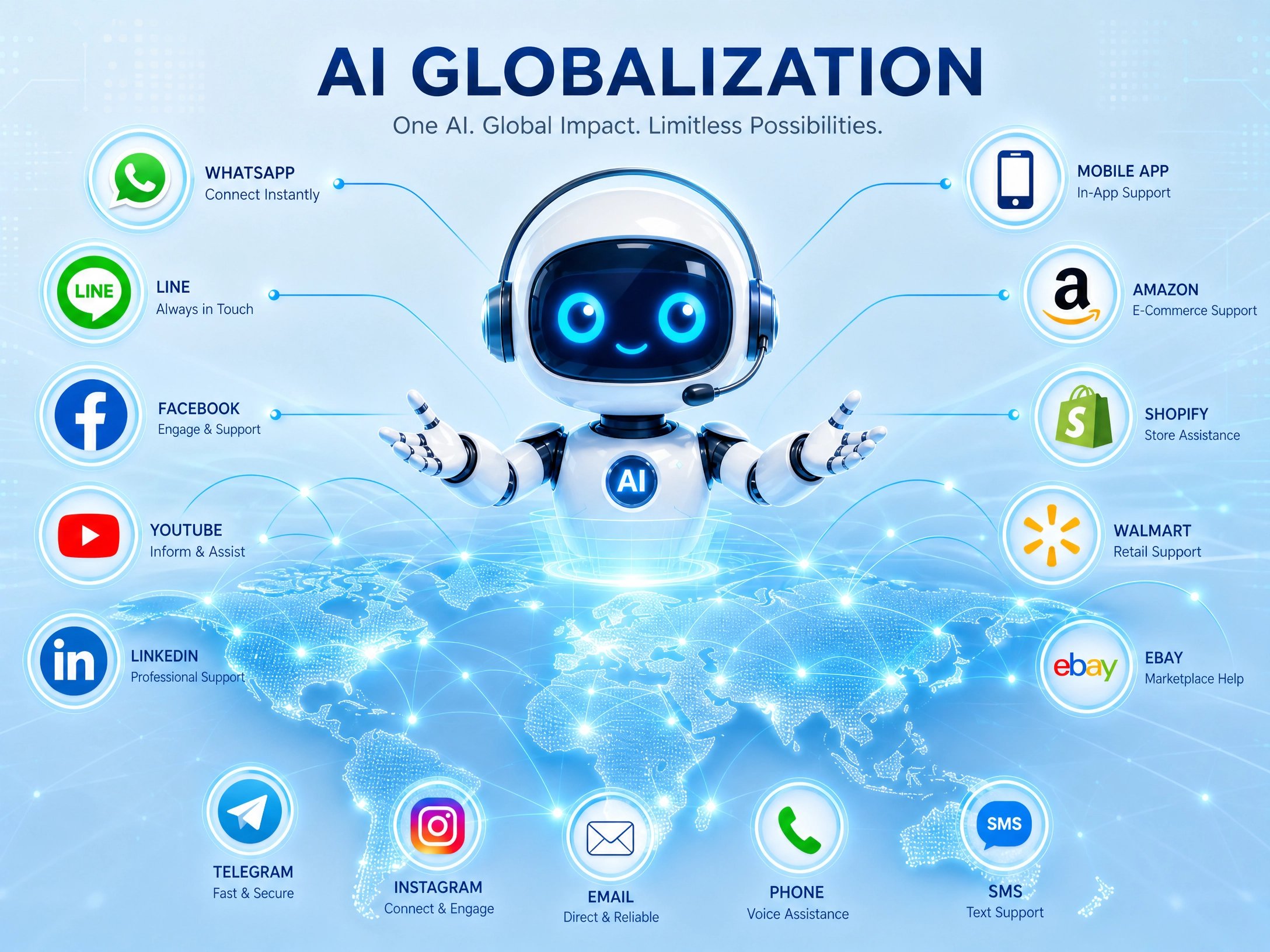
Core Difference: Both support major channels. Udesk excels in Southeast Asian channels, while Intercom is stronger in social interaction and in-app engagement in Europe and America.
| Comparison Dimension | Udesk | Intercom |
|---|---|---|
| Core Channels | Prioritizes WhatsApp adaptation, covering all major overseas channels | Commands European and American social channels, email, and online chat with strong adaptation |
| Regional Local Channels | Full support for minor local social channels in Southeast Asia | No dedicated adaptation for Southeast Asian local channels, with incomplete regional coverage |
| Channel Stability | Cross-border network optimization for Southeast Asia, with low latency and high stability | Stable network in Europe and America, but high latency for cross-border access in Southeast Asia |
| Standout Capabilities | Unified full-channel workspace, with integrated customer profile management | In-app messaging, product guidance, and proactive behavior-based user outreach |
Core Difference: Udesk offers full-scenario AI and complete voice capabilities. Intercom excels in conversational AI and user operations.
| Comparison Dimension | Udesk | Intercom |
|---|---|---|
| AI Agent (Core Difference) | Text + voice AI agents, fully automated processes, accurate recognition of minor Southeast Asian languages, and fast updates | Fin conversational AI agent with mature, natural text interaction; no mature voice AI, automation limited to service replies |
| Online Customer Service | Complete core features, full AI support for intake and routing of inquiries | Superior conversational interaction experience, suited to SaaS user inquiry scenarios |
| Cloud Call Center | Full international line coverage, AI outbound calling, intelligent voice quality inspection, and voice tickets | No mature voice calling system, lacking voice automation capabilities |
| Ticketing System | Customizable workflows, AI intelligent ticket assignment, automatic closure, and end-to-end tracking | Mature basic ticket coordination and complete standard workflows, without deep AI automation support |
| Data Analysis | Basic reports + AI intelligent operational diagnostics and risk alerts | Mature AI interaction-data analysis, focused on user behavior and conversion analysis |
| Standout Features | A complete cross-border customer service closed loop, suited to both B2B and B2C businesses | Product guidance and proactive marketing outreach, suited to SaaS user-growth scenarios |

Core Difference: Deployment and security capabilities are comparable. Intercom’s ecosystem suits European and American SaaS tools better, while Udesk adapts better to local integrations for cross-border enterprises.

| Comparison Dimension | Udesk | Intercom |
|---|---|---|
| Deployment Mode | Supports public cloud, private cloud, and hybrid cloud, meeting the compliance needs of various enterprises | Primarily public cloud, supports enterprise customization, with a simpler deployment model |
| Security & Stability | Full data encryption, disaster recovery backup, and stable operation under high-traffic scenarios | Industry-standard security architecture, data compliance aligned with European and American systems, and guaranteed stability |
| Extension & Integration | Rich APIs, low-code custom development, and adaptable integration with cross-border local tools | Mature integration with the European and American SaaS ecosystem, compatible with Slack, Salesforce, etc. |
Core Difference: Udesk pricing is transparent with no hidden fees. Intercom’s billing model is complex, and large-scale usage costs are higher.
| Comparison Dimension | Udesk | Intercom |
|---|---|---|
| Pricing Model | Integrated package pricing, with clear and transparent rules | A hybrid model of per-seat subscription + pay-per-use AI billing, with complex rules |
| Core Feature Costs | AI capabilities, full channels, and advanced reporting included in the base package | Advanced AI features and add-ons are billed separately, with AI sessions charged separately |
| Overall Cost | No hidden fees, with high cost efficiency for large-scale long-term use | High base per-seat pricing and uncontrolled AI usage, leading to high total overall cost |

Strengths
Weaknesses
Strengths
Weaknesses
 Contact