 Customer Service& Support Blog
How to Integrate CRM with Your Contact Center in Malaysia
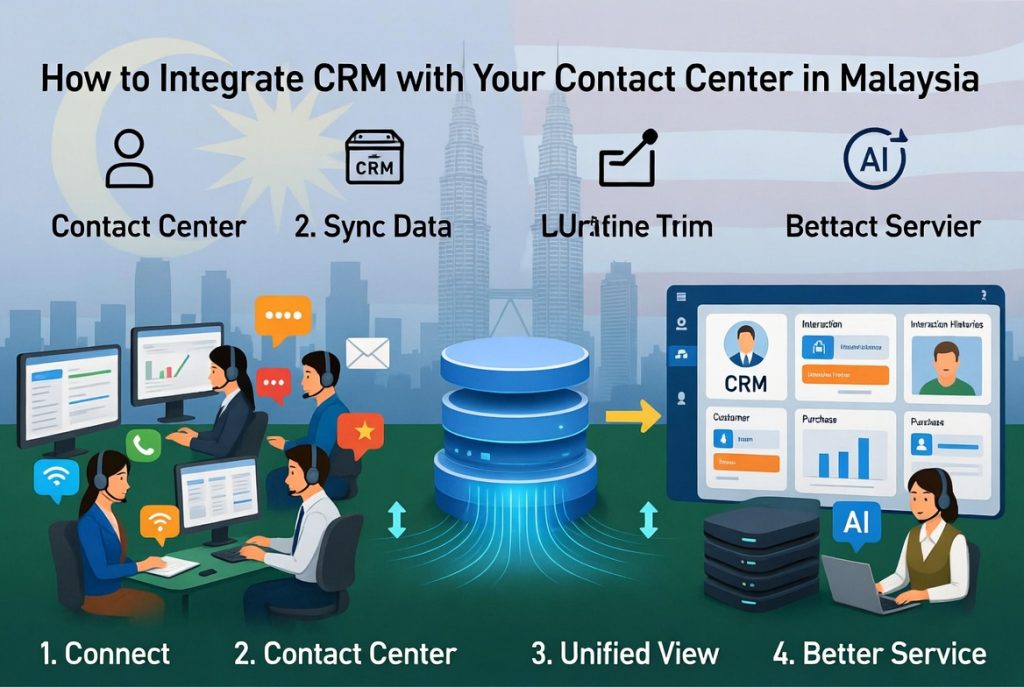
article summary:In Malaysia’s competitive business landscape, where 89.6% of consumers are internet users and 94% rely on WhatsApp, Facebook Messenger, and Shopee for interactions, delivering seamless customer service is no longer optional—it’s essential. For Malaysian businesses, two tools stand out as cornerstones of exceptional customer experience (CX): Customer Relationship Management (CRM) systems, which store critical customer data and journey histories, and contact centers, the frontline of customer engagement.



Table of contents for this article
- Introduction: The Power of Integration for Malaysia’s Customer-Centric Businesses
- Why CRM-Contact Center Integration Matters for Malaysian Businesses
- Key Challenges of Integration for Malaysian Businesses
- Step-by-Step Guide to Integrating CRM with Your Contact Center in Malaysia
- 1. Define Your Integration Goals
- 2. Choose a Compatible Integration Solution
- 3. Prioritize Data Security & Compliance
- 4. Train Your Team for Seamless Adoption
- 5. Test & Optimize for Local Needs
- Udesk: The Ideal Integration Partner for Malaysian Businesses
- Conclusion: Unlock Growth with Udesk’s Seamless Integration
- 》》Click to start your free trial of Udesk customer service solution, and experience the advantages firsthand.
Introduction: The Power of Integration for Malaysia’s Customer-Centric Businesses
Why CRM-Contact Center Integration Matters for Malaysian Businesses
Key Challenges of Integration for Malaysian Businesses
Step-by-Step Guide to Integrating CRM with Your Contact Center in Malaysia
1. Define Your Integration Goals
Start by identifying clear objectives aligned with your business and Malaysian consumer needs. Common goals include reducing call handling time, eliminating repetitive customer inquiries, improving agent efficiency, and enhancing personalized service. For e-commerce businesses, this might mean syncing order history from CRM to the contact center; for banks, it could involve integrating account details and loan applications to enable faster support.
2. Choose a Compatible Integration Solution
Not all integration tools are designed for Malaysia’s market. Look for solutions that support popular local channels (WhatsApp, Shopee) and comply with MCMC regulations. Avoid custom integration, which is costly and time-consuming—instead, opt for a platform that offers pre-built integrations with leading CRM systems (e.g., Salesforce, HubSpot) and contact center tools. This is where Udesk stands out: its all-in-one platform eliminates the need for complex custom setups, with built-in integration capabilities tailored to Malaysian businesses.
3. Prioritize Data Security & Compliance
Malaysia’s strict data privacy laws (including MCMC guidelines and GDPR alignment) require secure data handling. Ensure your integration solution encrypts customer data during transfer and storage, maintains detailed interaction records for at least two years, and offers role-based access controls to prevent unauthorized data access. Udesk’s distributed cloud-native architecture ensures 99.99% system availability and end-to-end encryption, meeting all MCMC requirements and giving businesses peace of mind.
4. Train Your Team for Seamless Adoption
Integration is only effective if your agents can use the unified system confidently. Provide training on accessing CRM data from the contact center dashboard, using real-time customer insights to deliver personalized service, and troubleshooting common issues. Udesk’s intuitive interface reduces training time, with a unified dashboard that centralizes CRM data, contact center tools, and multilingual support—ensuring agents can adapt quickly.
5. Test & Optimize for Local Needs
Test the integrated system with a small team before full deployment, focusing on real-time data sync, channel integration, and multilingual support. Gather feedback from agents and customers, then optimize to address pain points—such as adjusting data fields to align with Malaysian customer preferences or improving sync speed during peak periods like Ramadan. Udesk’s advanced analytics tools help track key metrics (call handling time, CSAT, agent efficiency) to identify areas for improvement.
3. Prioritize Data Security & Compliance
Malaysia’s strict data privacy laws (including MCMC guidelines and GDPR alignment) require secure data handling. Ensure your integration solution encrypts customer data during transfer and storage, maintains detailed interaction records for at least two years, and offers role-based access controls to prevent unauthorized data access. Udesk’s distributed cloud-native architecture ensures 99.99% system availability and end-to-end encryption, meeting all MCMC requirements and giving businesses peace of mind.
4. Train Your Team for Seamless Adoption
Integration is only effective if your agents can use the unified system confidently. Provide training on accessing CRM data from the contact center dashboard, using real-time customer insights to deliver personalized service, and troubleshooting common issues. Udesk’s intuitive interface reduces training time, with a unified dashboard that centralizes CRM data, contact center tools, and multilingual support—ensuring agents can adapt quickly.
5. Test & Optimize for Local Needs
Test the integrated system with a small team before full deployment, focusing on real-time data sync, channel integration, and multilingual support. Gather feedback from agents and customers, then optimize to address pain points—such as adjusting data fields to align with Malaysian customer preferences or improving sync speed during peak periods like Ramadan. Udesk’s advanced analytics tools help track key metrics (call handling time, CSAT, agent efficiency) to identify areas for improvement.
5. Test & Optimize for Local Needs
Test the integrated system with a small team before full deployment, focusing on real-time data sync, channel integration, and multilingual support. Gather feedback from agents and customers, then optimize to address pain points—such as adjusting data fields to align with Malaysian customer preferences or improving sync speed during peak periods like Ramadan. Udesk’s advanced analytics tools help track key metrics (call handling time, CSAT, agent efficiency) to identify areas for improvement.
Udesk: The Ideal Integration Partner for Malaysian Businesses
Conclusion: Unlock Growth with Udesk’s Seamless Integration
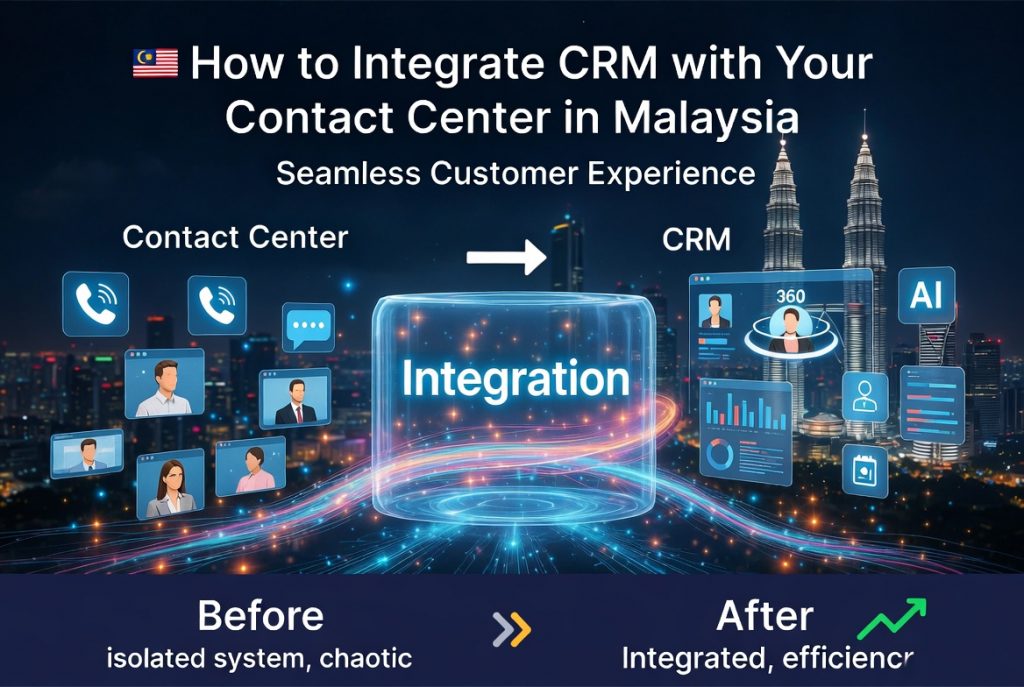
Udesk’s pre-built integrations, multilingual support, MCMC compliance, and intuitive interface make it the ideal partner for businesses of all sizes—from small local brands to large enterprises. Whether you’re looking to reduce operational costs, boost customer loyalty, or comply with local regulations, Udesk simplifies CRM-contact center integration and turns it into a driver of growth. In Malaysia’s customer-centric market, the right integration isn’t just about connecting systems—it’s about connecting with your customers—and Udesk helps you do that seamlessly.
》》Click to start your free trial of Udesk customer service solution, and experience the advantages firsthand.

The article is original by Udesk, and when reprinted, the source must be indicated:https://my.udeskglobal.com/blog/how-to-integrate-crm-with-your-contact-center-in-malaysia.html
contact center Malaysiacustomer service systemhelpdesk system